Jeff Sawyer

EARNING Trust and unlocking HUMAN potential


Category: Motivation

  • “They Aren’t Different From You.” The Mindset Shift That Unlocks Life-Changing Confidence.

    “They Aren’t Different From You.” The Mindset Shift That Unlocks Life-Changing Confidence.

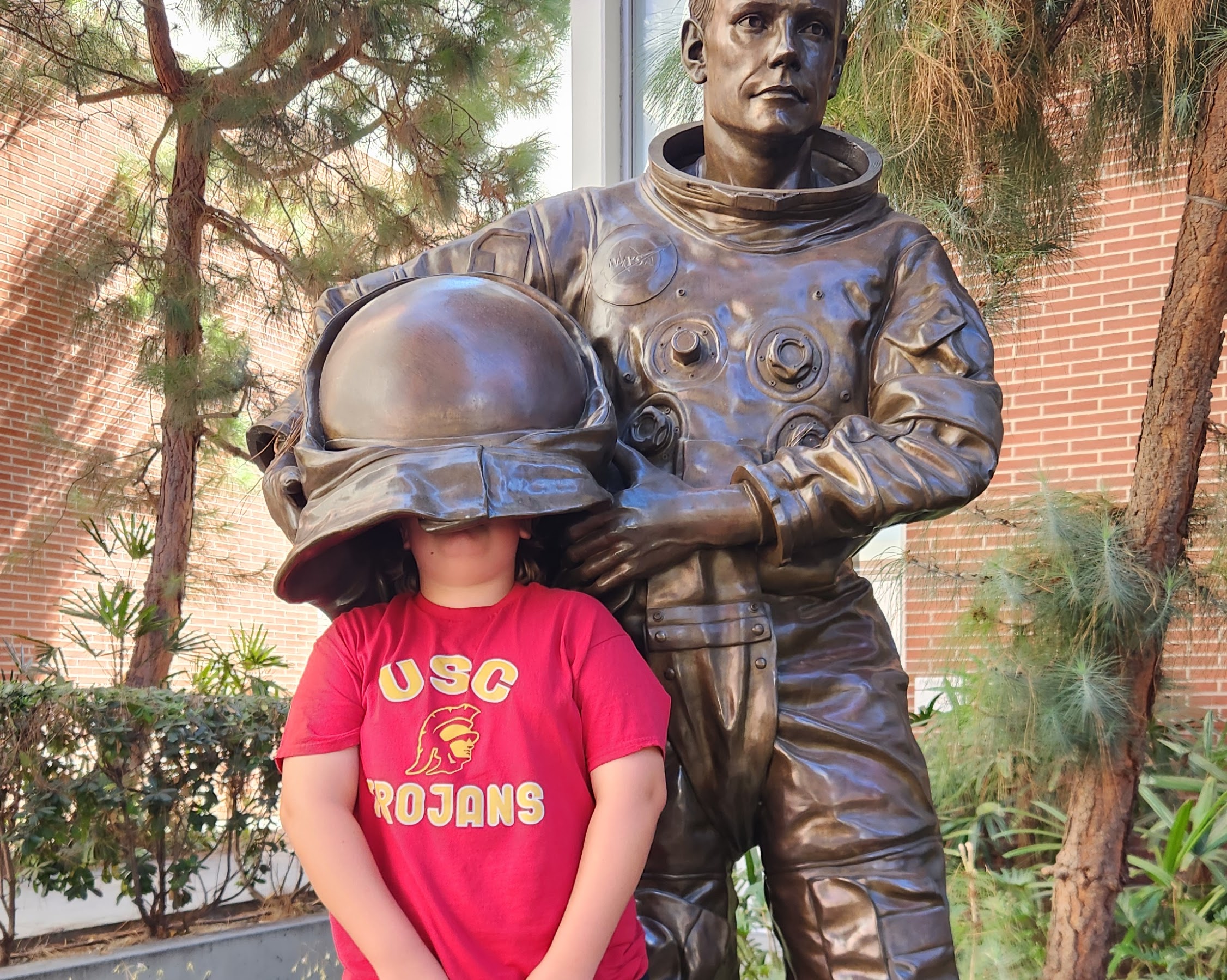
    This past weekend, I took my kids—ages 14 and 11—to a football game at my alma mater, USC. For us, game day has a specific ritual. It starts long before kickoff. We walk through campus, stop by the bookstore, and I share stories about the legacy of the place.

    As we walk past the engineering school, I don’t just talk about the buildings; I talk about the people. I tell them about figures like Neil Armstrong and Andrew Viterbi, individuals whose work fundamentally shaped technology and exploration. Then, we walk to the Coliseum with 70,000 other fans and watch the game.

    The purpose of this ritual isn’t just nostalgia or school pride. It’s a deliberate effort to teach my children a single, critical lesson: The people we classify as “great” are fundamentally no different than they are.

    The Pedestal Problem

    Think back to when you were young. Whether it was looking up at professional athletes, brilliant scientists, or successful business leaders, we often create a narrative that “they” possess some innate, almost magical quality that separates them from “us.”

    This creates what I call the “pedestal problem.” We place successful individuals so high above us that the distance feels insurmountable. This mindset, often formed in childhood, quietly follows us into our professional lives. It manifests as imposter syndrome.

    It’s the voice that whispers:

    • “I could never start my own company; I’m not like them.”
    • “I shouldn’t apply for that promotion; I don’t have the background of the people in that room.”
    • “I can’t speak up in this meeting; my ideas aren’t as valuable as the senior executives’.”

    This fear-based perspective doesn’t just limit our ambitions; it prevents us from making the very decisions that could transform our lives. We self-select out of opportunities before we even begin.

    From Intimidation to Humanization

    The antidote to the pedestal problem is humanization.

    When I talk about Neil Armstrong with my kids, I emphasize that before he was an icon, he was an engineering student who studied, failed tests, and had to learn to manage fear under extreme pressure. When I talk about innovators like Viterbi, I frame them as people who simply pursued a question or a problem with relentless curiosity until they found an answer.

    They weren’t born legends. They were people who made a series of decisions—often difficult and frightening ones—and committed to the process.

    When we shift our mindset from viewing successful people as icons to viewing them as peers who simply navigated challenges effectively, everything changes. Intimidation gives way to curiosity. Fear gives way to possibility.

    Unlocking Your Next Decision

    This change in perspective is the foundation of genuine confidence. Confidence isn’t about believing you’ll never fail. It’s about understanding that the people you admire also faced failure and doubt, yet they proceeded anyway.

    In your career, this translates directly to action:

    1. Reframe Networking: Don’t approach industry leaders as a fan seeking an autograph. Approach them as a peer genuinely curious about the problems they solved and the decisions they made. You’ll find they are just people, too.
    2. Pursue “Stretch” Roles: Stop comparing your complete set of skills to a job description’s ideal requirements. Recognize that every person who previously held that role had to learn on the job. The “great” candidate you imagine is a myth.
    3. Embrace Bold Moves: The decision to launch a new venture, pivot industries, or take on a high-stakes project feels less like a leap into the unknown and more like a calculated next step when you realize that everyone who has done it before felt similar uncertainty.

    My hope for my children is that by walking those campus paths, they internalize that legacy isn’t something to be passively admired. It’s something to be actively joined. They don’t have to be the next Neil Armstrong; they just have to believe they possess the same human potential to solve hard problems and make their own impact.

    The same is true for all of us. The moment you stop seeing “them” as different and start seeing yourself as capable, you gain the confidence to make your next life-transforming decision.


  • The Sages Who Never Meant to Teach

    We usually look for mentors on conference stages or in the corner office. We expect wisdom to be delivered in a neat, inspiring package, perhaps with a power suit and a perfectly timed anecdote. But I’m learning that life’s most profound teachers—the real sages—often show up in the most unusual places, and they rarely come bearing gifts. In fact, sometimes they come bearing a whole lot of difficulty.

    They aren’t the wise, gentle guides we picture, offering comforting words and clear directions. Instead, their “lessons” come disguised as challenges that push every button you have, forcing you out of your comfort zone and into uncharted territory.

    For a planner like me, someone who runs on consistency, thrives on structure, and holds a firm belief in fairness, this has been… an adjustment. A massive one. My most powerful teacher lately hasn’t been a traditional mentor, but a series of events and interactions that forced me to throw the playbook out the window entirely. It’s been an unexpected masterclass in adaptability, a crash course in developing a thicker skin than I ever knew I needed.

    These unlikely sages don’t offer wisdom willingly or intentionally. Their instruction is often indirect, delivered through the very obstacles they present. By forcing us to navigate chaos and unpredictability, by challenging our core assumptions about how things “should” be, they teach us how to bend without breaking. They teach us to find our own stability and resilience when the world won’t provide it for us, or even actively tries to take it away. They show us that our capacity for strength is far greater than we imagined.

    It’s a tough curriculum, for sure. There are no easy A’s, and the homework often feels overwhelming. But the growth is undeniable. When you come out the other side, you realize you’re not just surviving; you’re thriving in a new, more robust way. You’ve learned to dance in the rain, even when it feels like a hurricane.

    Who has been an unexpected sage in your life? What difficult lesson, delivered by an unconventional teacher, ended up being exactly what you needed?

  • The Power of Iteration: My Pinewood Derby Journey

    Ever heard the saying, “If at first you don’t succeed, try, try again”? It’s a cliché for a reason, especially when it comes to product development. The journey from a great idea to a tangible, functional product is rarely a straight line. More often, it’s a series of small steps, tests, and refinements – a process known as iteration.

    When you’re developing something new, it’s easy to get caught up in the desire for perfection from the outset. We want the first version to be the version, flawless and ready for prime time. But the reality is, true innovation and robust design come from embracing imperfection and the learning that comes with it.

    Think of it like this: you have an idea, you build a prototype (even a rough one), you test it, you learn what works and what doesn’t, and then you make a small, focused change. You don’t scrap the whole thing and start over; you refine. You iterate.

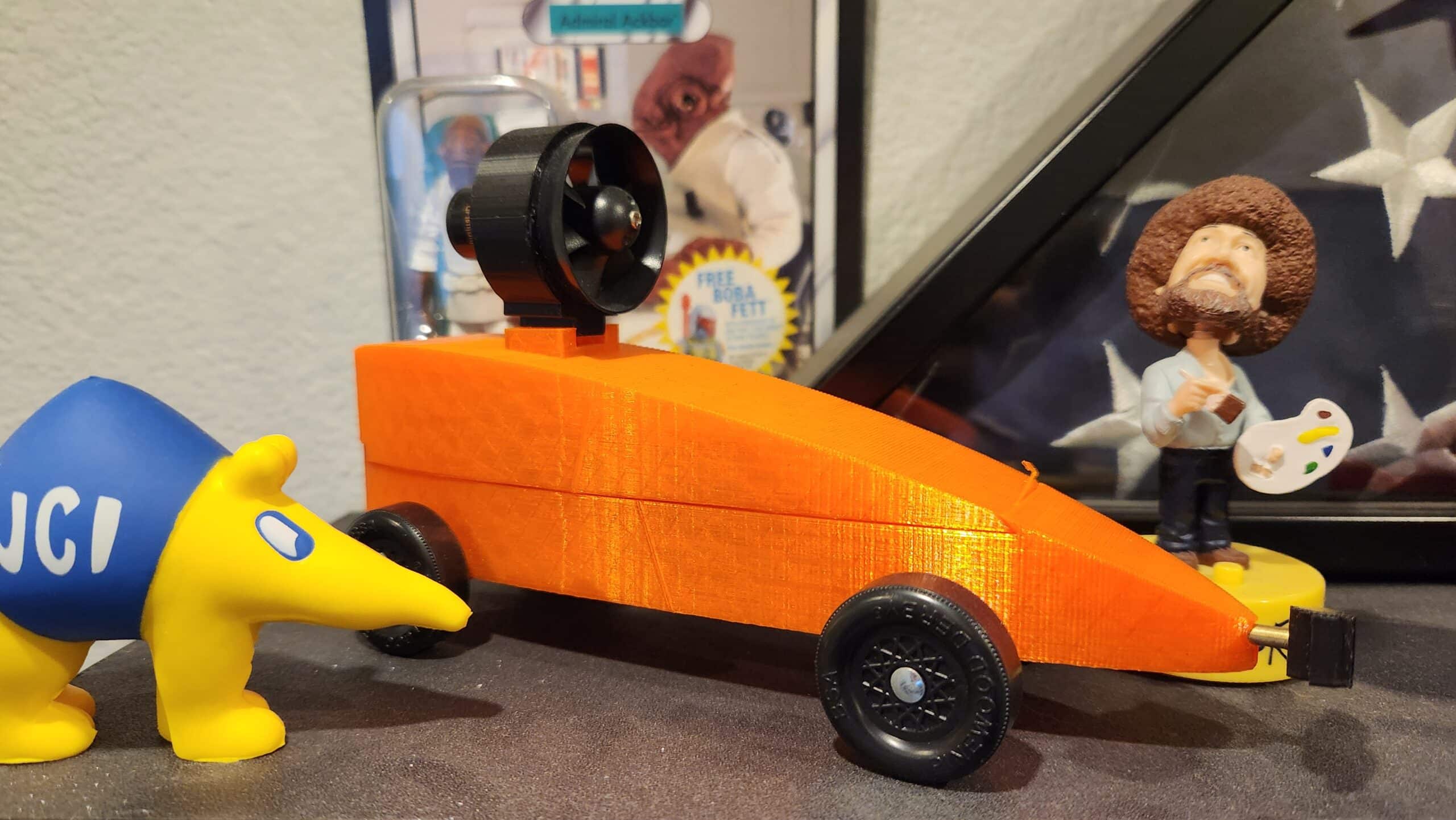
    I experienced this firsthand when I decided to learn Computer-Aided Design (CAD). What better way to learn a new skill than by tackling a fun, slightly over-engineered project? My goal was to design a Pinewood Derby car, but not just any car. This one would have a microcontroller and a fan motor mounted on top – a truly ambitious, and perhaps slightly absurd, addition to a traditional gravity-powered race car.

    My initial designs in CAD were, let’s just say, optimistic. I’d spend hours meticulously crafting what I thought was the perfect body, only to print it and realize that the fan motor didn’t fit quite right, or the weight distribution was completely off, or the aesthetic was just… not there.

    Instead of getting discouraged, I leaned into the iterative process. Each print was a learning opportunity.

    Here are all seven versions of the car body I printed throughout my design journey:

    You can see the progression!

    • Version 1 was just getting the basic shape down, learning two axis shapes in CAD.
    • Version 2 stated to curve the sides.
    • Versions 3, 4 and 5 dealt with fitting fan and figuring out the best was to connect it.
    • Version 6 adding a location for the wheels to mount, making sure the cavity can fit the battery and microcontroller and fitting the top and bottom.
    • And finally, Version 7 (the one with the electronics mounted) was the culmination – a design where everything fit, looked good, and was ready for the track (or at least, ready to look cool on a shelf after the race!).

    Each iteration wasn’t a failure, but a step forward. Each physical model in my hand allowed me to see flaws that weren’t apparent on a screen. I could feel the weight, test the clearances, and visualize the final product in a way that CAD alone couldn’t provide.

    This experience solidified my belief in the iterative approach to any development process, whether it’s learning a new software, designing a complex product, or even writing a blog post.

    Key Takeaways for Your Next Project:

    1. Start Small, Learn Fast: Don’t aim for the magnum opus on your first try. Get a basic version out there as quickly as possible.
    2. Test Relentlessly: Every change, no matter how minor, should be followed by a test. This is where you gather crucial feedback.
    3. Embrace “Failure” as Feedback: If something doesn’t work, that’s not a setback; it’s data. It tells you what to change next.
    4. Make Incremental Changes: Avoid overhauling everything at once. Small, focused adjustments make it easier to pinpoint what’s working and what’s not.
    5. Document Your Journey: Like my collection of car bodies, keeping track of your iterations helps you see your progress and learn from past attempts.

    So, the next time you’re faced with a challenge in product development, or really, any complex task, remember my Pinewood Derby car. Don’t seek perfection immediately. Instead, embrace the journey of iteration – make a change, test it, learn, and repeat. It’s the most effective path to success.

  • Guided by Giants: Unveiling Inner Wisdom with Business Coaching

    The phrase “Standing on the shoulders of giants,” a concept I first encountered in engineering school, transcends its initial context to offer profound wisdom in the business world. In my journey with business coaching, this principle has been a guiding light, teaching me to build upon the accumulated wisdom of past business leaders and thinkers. This philosophy underlines the importance of learning from history to forge a successful future in business and life. Along with learning from our past teachers, a coach like Dave Kinnear helps you see your inner wisdom and provides guidance to tap into your own wisdom, reshaping your perspective on career, family, and life. It’s a journey of discovery and rediscovery, where a coach like Dave acts as a mirror, reflecting your innate wisdom and understanding while providing insight from our past teachers.

    The Role of a Business Coach

    Business coaches are more than advisors; they are facilitators of self-awareness. Their skill lies in guiding you to uncover and utilize the knowledge and insights you possess, helping you navigate personal and professional landscapes.

    Uncovering Hidden Insights

    1. Reflective Problem-Solving: Coaches lead you to use your own experiences and knowledge to solve problems creatively.
    2. Harnessing Personal Experiences: By reflecting on past experiences, coaches help you find wisdom in your own journey, viewing adversities as learning opportunities.
    3. Balancing Life with Inner Knowledge: Coaches assist in recognizing and aligning your career and family life based on your values and beliefs.

    The Process of Self-Discovery

    • Self-Assessment and Realization: Identifying your strengths, weaknesses, and innate abilities through introspection.
    • Goal Setting Based on Self-Knowledge: Setting realistic goals that align with your personal insights and aspirations.
    • Sustained Growth and Accountability: Regular sessions with a coach provide a structured approach to personal and professional development.

    The Path of Learning from Past Masters

    • Reflecting on Past Teachings: Gaining insight from the wisdom and experiences of previous educators and mentors.
    • Setting Aspirational Goals Inspired by Predecessors: Formulating ambitions influenced by the achievements and teachings of those who paved the way.
    • Continual Advancement and Reverence: Consistently engaging in learning and development, acknowledging and building upon the foundational work of past giants in your field of interest.

    The transformative power of a business coach like Dave Kinnear lies in their ability to help you tap into and utilize your own knowledge and experiences. This journey of self-discovery and reflection has reshaped how I approach all aspects of life. Far from being a mere advisory service, business coaching is about uncovering the wisdom you already possess guiding you towards realizing your full potential.

    Thank you, Dave, for your insights and knowledge transforming my perspective and life.

  • The Compass of Success: Defining Our Vision and the Role of Values

    In the dynamic and often unpredictable world of business, navigating toward success requires more than just a destination; it requires a compass. Today, I want to delve into the essence of what guides us as a team: our Vision and the pivotal role of Values. These aren’t mere buzzwords; they’re the pillars upon which we build our journey.


    Our Vision – The Destination We Seek

    Picture a ship setting sail without a destination. It wanders aimlessly, at the mercy of the winds and tides. Our Vision is the antithesis of this; it is our chosen destination, the beacon towards which we steer all our efforts. It represents our collective aspirations, our goals, and the impact we aim to make. This Vision serves as our strategic roadmap, guiding each decision and propelling us forward with purpose.

    Defining Values – Our Moral Compass

    Now, let’s talk about Values. What are they? Values are the fundamental beliefs that guide our behaviors and decision-making processes. They are the moral compass that keeps us aligned with our Vision. Values are the guardrails that ensure we stay true to our ethos, no matter the challenges we encounter.

    Imagine Values as the stars by which ancient sailors navigated. Each value is a star, providing direction and keeping the ship on course. They are the principles that dictate how we operate, interact, and make choices. Values are what anchor us to our Vision, ensuring that our journey is not only successful but also ethical and meaningful.


    The Interplay of Vision and Values

    The relationship between Vision and Values is symbiotic. While our Vision sets the destination, our Values determine how we get there. They ensure that in our pursuit of success, we don’t lose sight of who we are and what we stand for. In moments of uncertainty or ethical dilemmas, it’s our Values that offer clarity and guidance.


    Embracing the Journey

    As we sail the seas of our industry, our Vision and Values are our constant companions. They remind us that the journey is as important as the destination. They inspire us to make decisions that aren’t just beneficial but are also aligned with our core beliefs. It’s this combination of a clear Vision and strong Values that paves the way for sustainable success.


    Our Vision and Values are more than strategic tools; they are a reflection of our identity. They are what sets us apart, what drives our passion, and what ensures that our journey is as commendable as our achievements. Join us on this voyage, where our Vision sets the destination, and our Values light the way.

    #TeamVision #CoreValues #Leadership #SustainableSuccess

  • Fostering Long-Term Growth in Your Team: A Personal Leadership Philosophy

    I was inspired to write this when Instagram reminded me about Steve Jobs’s conversation in 1992 with MIT students where he was asked, “What is the most important thing that you personally learned at Apple….?”  He answered, after a long, thoughtful pause, “….I now take a longer-term view on people….”

    Over the years, I’ve come to realize the immense value of looking at team members not just as employees but as long-term partners in success. This approach has profoundly shaped my leadership style and how I envision the growth of my organization. Here are some key lessons I’ve learned along the way.

    Encouraging Growth Rather Than Just Fixing Mistakes

    Early in my career, I often found myself stepping in to correct mistakes. However, I’ve learned that a more sustainable approach is to help team members learn and grow from their experiences. This means viewing errors not as setbacks but as opportunities for development. It’s a shift from a quick-fix mentality to a growth-oriented mindset.

    Collaborative Decision-Making

    In my team, we practice a collaborative approach to significant decisions. This doesn’t mean that every decision is made by committee, but I believe in the power of collective wisdom for those critical choices. This approach takes patience, but decisions are often more comprehensive and effective.

    It takes trust from everyone to grow.

    Trust and Value in the Team

    I strongly believe in trusting the expertise of my team. By actively seeking their advice and valuing their opinions, I foster a culture where everyone feels heard and respected. This leads to better decision-making and creates a more engaged and motivated team.

    Diplomacy in Conflict Resolution

    Conflicts are natural, but how they are handled makes all the difference. I advocate for a diplomatic approach, facilitating conversations where differing viewpoints can be expressed and understood. This method resolves conflicts and often leads to stronger relationships and better solutions.

    Making Tough Decisions

    Leadership has its hard choices. There have been times when I’ve had to make tough calls for the team’s and the organization’s health. These decisions are never easy, but sometimes they are necessary for the team’s overall growth.


    Adopting a long-term perspective of your team members is about more than patience; it’s about nurturing a culture where growth, collaboration, respect, and trust are paramount. This philosophy doesn’t just prepare us for immediate challenges; it sets us up for enduring success. Remember, we’re not just building a team for today; we’re cultivating leaders and innovators for the future.

  • The Crucial Role of Trust in High-Performing Teams of Knowledge Workers

    In today’s fast-paced and ever-evolving work environment, teams of knowledge workers are at the forefront of innovation, problem-solving, and driving organizational success. However, the success of these teams hinges on a critical factor that often goes unnoticed but plays a pivotal role: trust. Trust is not merely about reliability; it’s about believing that your team members genuinely have your best interests in mind. This article will explore why trust is so critical for knowledge-worker teams.

    Trust as “I know that you know I have your best interests in mind.”

    This definition of trust encapsulates the essence of what makes it indispensable in a team of knowledge workers. Let’s break it down:

    1. Mutual Understanding: Trust begins with a mutual understanding that team members are working towards common goals. In a knowledge worker team, everyone must believe that their colleagues share the same commitment to achieving excellence.
    2. Emotional Safety: Knowledge workers often deal with complex tasks that require creative problem-solving and innovation. They need to feel emotionally safe within their team to take risks and think outside the box. Trust creates a safe environment where team members are not afraid to voice their ideas, concerns, or doubts.
    3. Collaboration and Innovation: Trust fosters collaboration. When team members know that their peers genuinely care about their success and well-being, they are more likely to collaborate openly, share knowledge, and co-create innovative solutions.
    4. Conflict Resolution: Trust acts as a buffer during conflicts or disagreements. In a high-trust environment, team members can address conflicts constructively, knowing that disagreements are not personal attacks but opportunities for growth and improvement.
    5. Productivity and Accountability: When trust is high, there’s a sense of shared responsibility for the team’s success. Team members are more likely to hold themselves accountable for their actions because they know their colleagues depend on them.

    Why Trust Matters for Knowledge Worker Teams

    1. Enhanced Productivity: Trust reduces the need for micromanagement and allows team members to work independently, knowing that their colleagues will support them when needed. This autonomy leads to increased productivity.
    2. Attraction and Retention of Talent: Knowledge workers are drawn to organizations and teams where they feel trusted and valued. Furthermore, high trust levels within a team increase employee retention rates.
    3. Innovation and Problem-Solving: In a high-trust environment, knowledge workers are more likely to share unconventional ideas and take calculated risks, leading to breakthrough innovations and creative solutions.
    4. Adaptability: Trust enables teams to adapt quickly to changing circumstances and challenges. When team members trust each other’s judgment and intentions, they can confidently pivot and embrace new approaches.
    5. Stress Reduction: Trust reduces workplace stress. When team members know they have the support of their colleagues, they can manage their workload more effectively, reducing burnout and increasing job satisfaction.

    Fostering Trust in Knowledge Worker Teams

    Building trust in a team of knowledge workers takes time. It requires continuous effort and a commitment to cultivating a culture of trust. Here are some strategies:

    1. Lead by Example: Leaders should set the tone by demonstrating trust in their team members’ abilities and intentions.
    2. Effective Communication: Encourage open and honest communication within the team. Ensure that everyone has a voice and is heard.
    3. Transparency: Be transparent about decisions and their rationale, especially in situations that directly impact the team.
    4. Recognition and Appreciation: Recognize and appreciate the contributions of team members. A simple “thank you” can go a long way in building trust.
    5. Conflict Resolution Training: Provide training on constructive conflict resolution to help team members address issues in a healthy manner.

    Trust is not a soft or intangible concept but a fundamental pillar of success for teams of knowledge workers. When team members trust that their colleagues genuinely have their best interests in mind, they can achieve remarkable feats, drive innovation, and navigate the complex challenges of the modern workplace with confidence and resilience. Building and nurturing trust should be a top priority for any team that aspires to reach its full potential.

  • Creating the Spark of Engineering

    Four cars are lined up at the start line.  The room filled with blue and tan shirt-wearing kids is wondering what is that big round thing on the top of a fluorescent orange tesla shaped car possibly could be.  The countdown begins, 5, 4, 2, 3, 2, 1, then the gate drops.  Mr. Mustach slowly drops behind just as everyone thought it was a loss, fuuuuuuuuu the engine turned on.  Mr. Mustach races past the three other cars for a finish in about a second.  Breaking the computer program and coming in one and a half seconds faster than all the others.

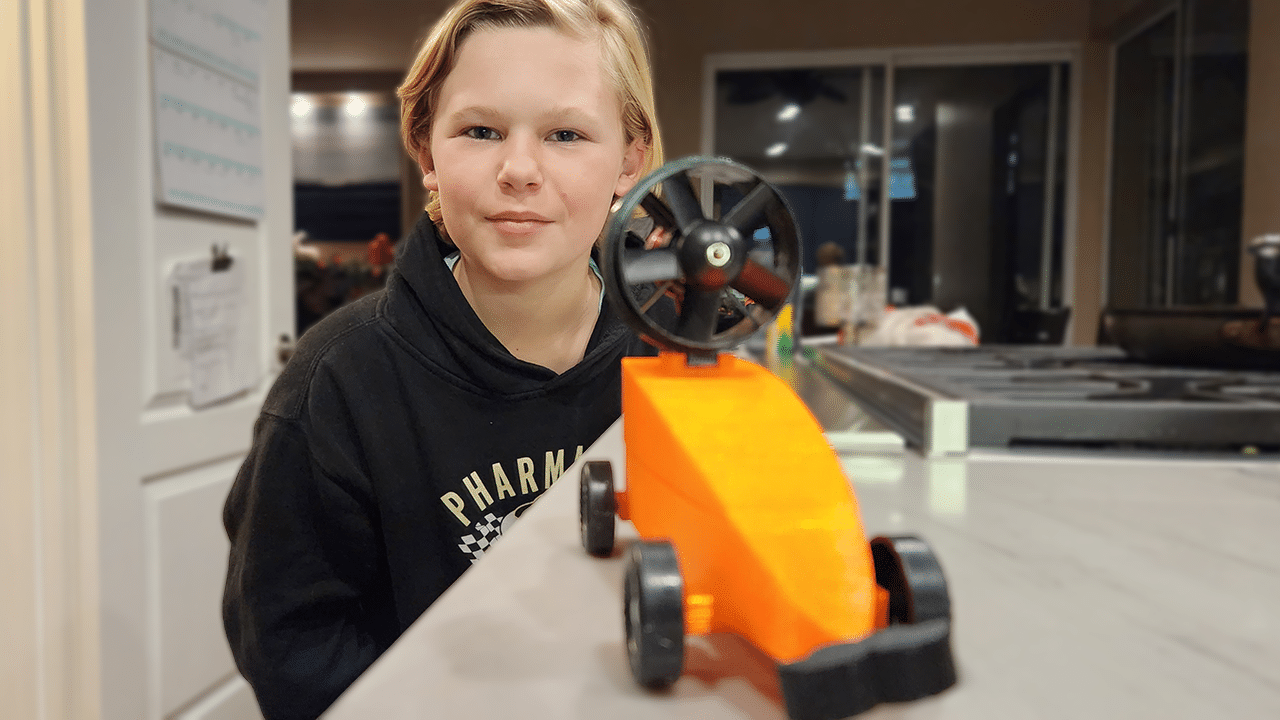
    I have two sons in scouting, one in cub scouts, and last year my oldest son bridged to boy scouts.  Our pack’s adults and older siblings are allowed to compete in a no-rules pinewood derby race.  Like many of your kids, my son is obsessed with Mark Rober’s videos on youtube, especially his episode about pinewood derby physicals and when he builds his ultra-fast car using a CO2 cartridge as a propellant.  As we attached that episode, my son said, “That is so cool!” I replied, “I think we can do that only better”.   After some discussion, we concluded that the CO2 cartage model would be too dangerous since it could not be slowed. We discussed putting a rocket engine rather than a cartridge, which was worse than the CO2.  We concluded that building a car with a duct fan controlled by a microcontroller triggered by the fence dropping would be best.

    I saw this as a great opportunity to work with my son to teach him about the engineering design process and let him be hands-on to help create something from a concept to a reality.  Selfishly, I had always been looking for a reason to buy a 3D printer, and this was just the opportunity to convince my wife that it was a need, not a want.  Armed with some CAD youtube videos, a new 3D printer, an Arduino nano, a battery, and the all-important duct fan in hand, we start creating.

    Throughout the build, I taught him about CAD and how to design iteratively to understand the physicals and add features to the design.  We printed six prototype copies of the car before coming to the final design.  We built the prototype drive system using an Arduino Uno R3, and he learned about pull-up resistors, brushless motor controllers, state machines, firmware flashing, and iterative testing.  We soldered it all together, replacing the Adruino Uno R3 with an Arduino Nano, and crammed it all into the belly of the car.

    With pinewood derbies, you are not allowed to run the car on the track before race day.  So you never know how your car will perform until the first race.  That’s one of the things that makes racing so fun. You never know what is going to happen.  We had calculated that about a second for thrust would get us the maximum performance while still benign able to turn off the fan before the end of the race.   On the first run, no one knew what was about to happen until they heard the fan kick in the saw the car fly down the track.  It was a huge success. The kids all loved it, especially my son, who was the topic of the bussing crowd.

    It is important to find projects that interest the people around you and teach them when they are ready to listen.  My son learned a lot about how hardware and software interact, he learned how different disciplines on a team of engineers work together to create. Most importantly, he learned that he could turn ideas into reality with patience, persistence, and passion.