
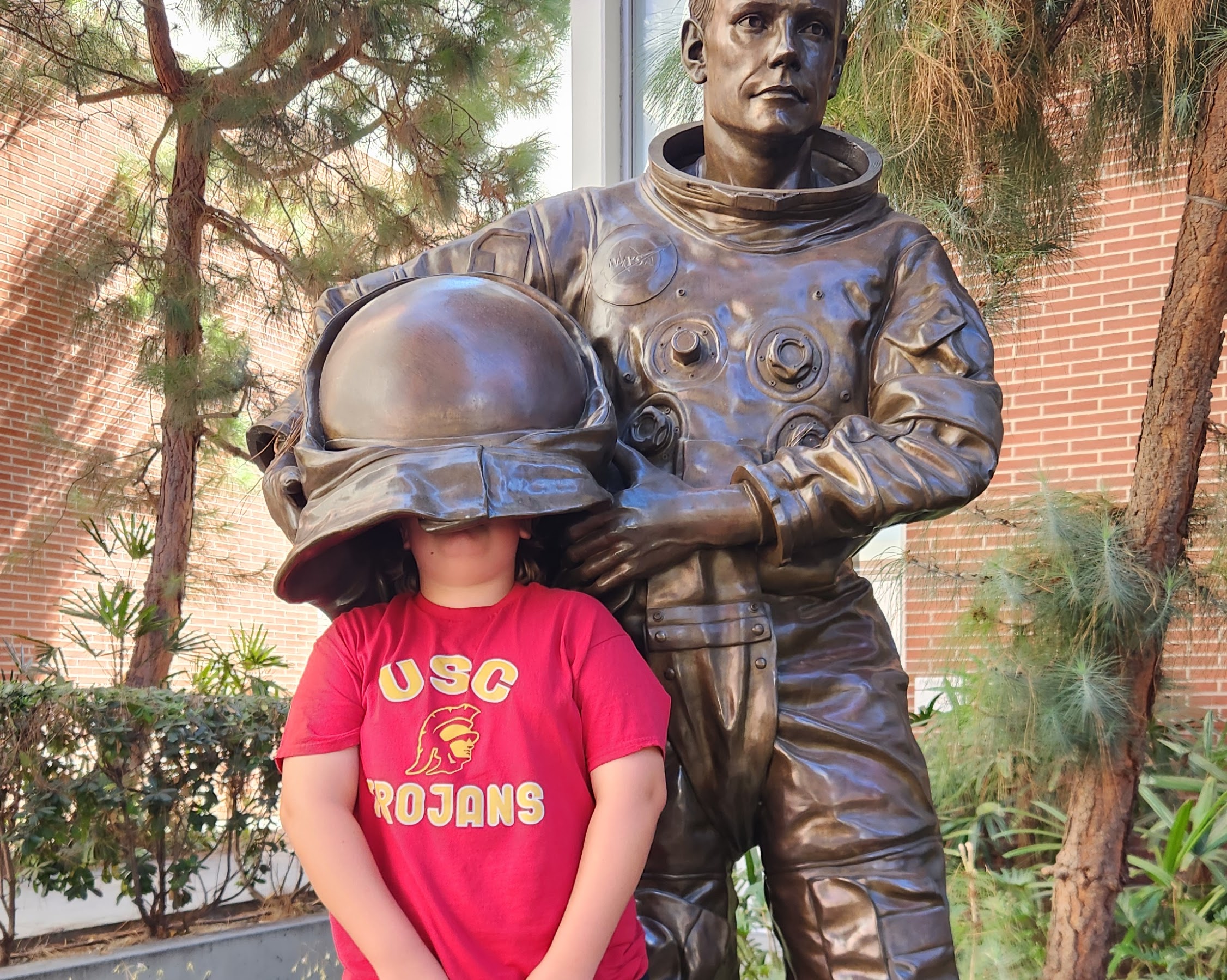
This past weekend, I took my kids—ages 14 and 11—to a football game at my alma mater, USC. For us, game day has a specific ritual. It starts long before kickoff. We walk through campus, stop by the bookstore, and I share stories about the legacy of the place.
As we walk past the engineering school, I don’t just talk about the buildings; I talk about the people. I tell them about figures like Neil Armstrong and Andrew Viterbi, individuals whose work fundamentally shaped technology and exploration. Then, we walk to the Coliseum with 70,000 other fans and watch the game.
The purpose of this ritual isn’t just nostalgia or school pride. It’s a deliberate effort to teach my children a single, critical lesson: The people we classify as “great” are fundamentally no different than they are.
The Pedestal Problem
Think back to when you were young. Whether it was looking up at professional athletes, brilliant scientists, or successful business leaders, we often create a narrative that “they” possess some innate, almost magical quality that separates them from “us.”
This creates what I call the “pedestal problem.” We place successful individuals so high above us that the distance feels insurmountable. This mindset, often formed in childhood, quietly follows us into our professional lives. It manifests as imposter syndrome.
It’s the voice that whispers:
- “I could never start my own company; I’m not like them.”
- “I shouldn’t apply for that promotion; I don’t have the background of the people in that room.”
- “I can’t speak up in this meeting; my ideas aren’t as valuable as the senior executives’.”
This fear-based perspective doesn’t just limit our ambitions; it prevents us from making the very decisions that could transform our lives. We self-select out of opportunities before we even begin.
From Intimidation to Humanization
The antidote to the pedestal problem is humanization.
When I talk about Neil Armstrong with my kids, I emphasize that before he was an icon, he was an engineering student who studied, failed tests, and had to learn to manage fear under extreme pressure. When I talk about innovators like Viterbi, I frame them as people who simply pursued a question or a problem with relentless curiosity until they found an answer.
They weren’t born legends. They were people who made a series of decisions—often difficult and frightening ones—and committed to the process.
When we shift our mindset from viewing successful people as icons to viewing them as peers who simply navigated challenges effectively, everything changes. Intimidation gives way to curiosity. Fear gives way to possibility.
Unlocking Your Next Decision
This change in perspective is the foundation of genuine confidence. Confidence isn’t about believing you’ll never fail. It’s about understanding that the people you admire also faced failure and doubt, yet they proceeded anyway.
In your career, this translates directly to action:
- Reframe Networking: Don’t approach industry leaders as a fan seeking an autograph. Approach them as a peer genuinely curious about the problems they solved and the decisions they made. You’ll find they are just people, too.
- Pursue “Stretch” Roles: Stop comparing your complete set of skills to a job description’s ideal requirements. Recognize that every person who previously held that role had to learn on the job. The “great” candidate you imagine is a myth.
- Embrace Bold Moves: The decision to launch a new venture, pivot industries, or take on a high-stakes project feels less like a leap into the unknown and more like a calculated next step when you realize that everyone who has done it before felt similar uncertainty.
My hope for my children is that by walking those campus paths, they internalize that legacy isn’t something to be passively admired. It’s something to be actively joined. They don’t have to be the next Neil Armstrong; they just have to believe they possess the same human potential to solve hard problems and make their own impact.
The same is true for all of us. The moment you stop seeing “them” as different and start seeing yourself as capable, you gain the confidence to make your next life-transforming decision.